
Arm the Believer Inside

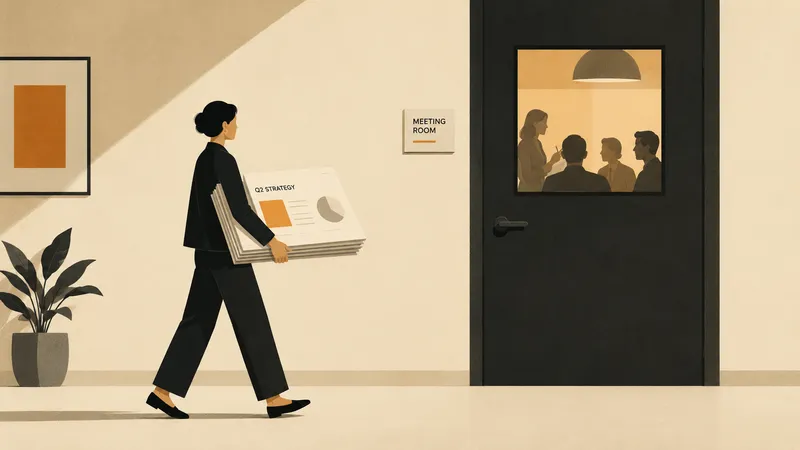
You will not be in the room.
Not the room that matters, anyway.
That’s the thing nobody tells you about designing for a big institution. The meeting where your idea lives or dies happens on a floor you’ll never visit, with people you’ll never meet.
This was State Bank of India. India’s largest public-sector bank. Government-backed.
In 2017 I led the brand identity and application experience for SBI Youth for India, a 13-month rural fellowship. (Agency: Altorise.)
And I had an idea that was going to be very hard to sell.
The idea in 20 seconds
- In a large organisation, you rarely win the room yourself.
- The decision happens in meetings you’re never invited to.
- So you find the person inside who already believes, and you arm them.
- Give them the deck, the video, the images. Things they can carry up the chain.
- You don’t sell the idea. You equip the insider who sells it for you.
Why the idea was a hard sell
I wanted to build a symbol-based visual language.
India doesn’t have one language. It has many. Any campaign that leans on words has picked a side before it’s said a thing.
So the language borrowed from sign language. Meaning carried in symbols, not sentences. Something a person could read whichever tongue they thought in.
Bold. Maybe too bold for a conservative, government-backed bank.
Because think about how approval works in a place like that. Feedback doesn’t arrive from one desk. It comes from senior leadership at the top, junior team members at the bottom, and everyone in between.
And every layer has a quiet reason to prefer the safe thing. Nobody ever got in trouble for approving what looked normal.
An unusual idea has to survive all of them.
I could present it once. I could not attend the other conversations.
So who wins the room when you’re not in it?
Someone who’s already on your side.
SBI had staffed the fellowship with its own past fellows, and that’s what saved the project. The coordinators weren’t administrators pushing paper. They’d lived the thirteen months. They knew what the programme actually was.
And they believed in the work.
So when the symbol language reached them, they didn’t flinch. They recognised it. They wanted it to survive.
That’s a rare thing to find inside a large institution. A person whose conviction matches yours, sitting on the right side of the wall.
What “arming” actually means
It means you stop thinking of yourself as the presenter.
You start thinking of yourself as the supplier.
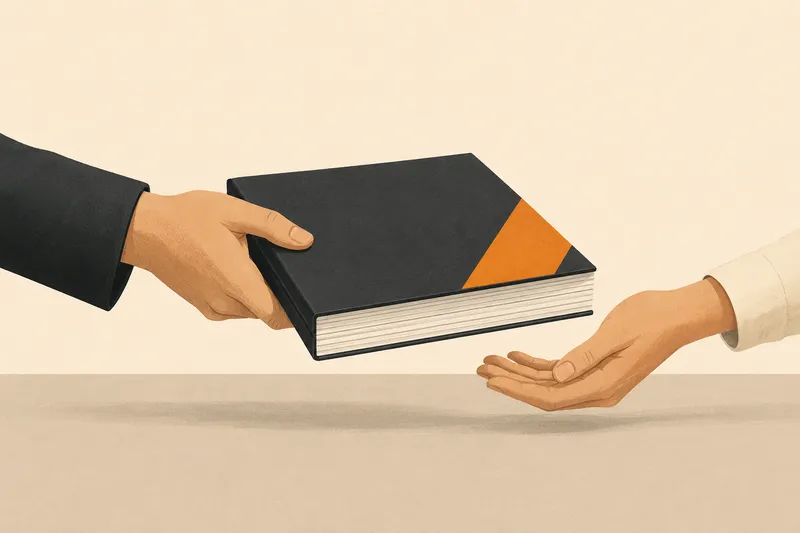
Your believer is going to walk into rooms you’ll never see. They’ll face questions you’ll never hear. They can’t phone you mid-meeting. So everything they might need has to already be in their hands.
For the coordinators, that meant real weapons:
- A presentation deck that made the case on its own, without me narrating it.
- Videos that showed the language moving, not just sitting on a page.
- Images they could hold up when someone senior asked, “But what does this actually look like?”
Not a pretty portfolio for me. A toolkit for them.
Every asset answered one question. When my believer gets challenged, two layers up, by someone sceptical, what do they reach for?
The uncomfortable part
I’ll be straight about this.
It stings a little to hand your best work to someone else and let them get the yes in the room.
You want to be there. You want to make the case yourself, watch the faces change, feel it land.
But that’s ego. And ego doesn’t scale past the first meeting.
The idea doesn’t care who argued for it. It only cares whether it survived.
An insider who believes will fight for it in rooms you’ll never enter. You’ll fight for it in one.
What I do differently now
Before I fall in love with a concept, I go looking for the believer.
Who inside this organisation already wants what I want? Who’s lived the problem? Who has standing in the rooms I’ll never reach?
Then I build for two audiences at once. The obvious one, the client. And the quieter one, the person who has to defend this after I’ve left the call.
Find the believer. Hand them ammunition. Let them carry it into rooms you’ll never be in.
The symbol language didn’t survive because I was persuasive on the day. It survived because someone on the inside cared enough to spend their own credibility on it.
My only real job was to make sure they never ran out of things to say.
More writing
 systems designinformation design
Finalised Isn't Final
We signed off a Diwali design for TUMI. Then a VP pulled it back. A quiet lesson about where design decisions really get made.
 systems designinformation designinteraction design
How Do You Design a Democracy for 173 Million People?
India's first general election was not only a political achievement. It was a vast exercise in inclusive system design.
 information designwayfindingsystems design
Designing for Someone Moving at 70 mph
Britain's road signs show what happens when typography, language and environment are treated as one system.