Delhi student protests · July 2026
We won’t
look away.
Students marched peacefully in Delhi. They were met with batons, tear gas, and men in plain clothes. The news called them violent. The court said it did not want to watch the videos. This page is a record, kept so that someone did.
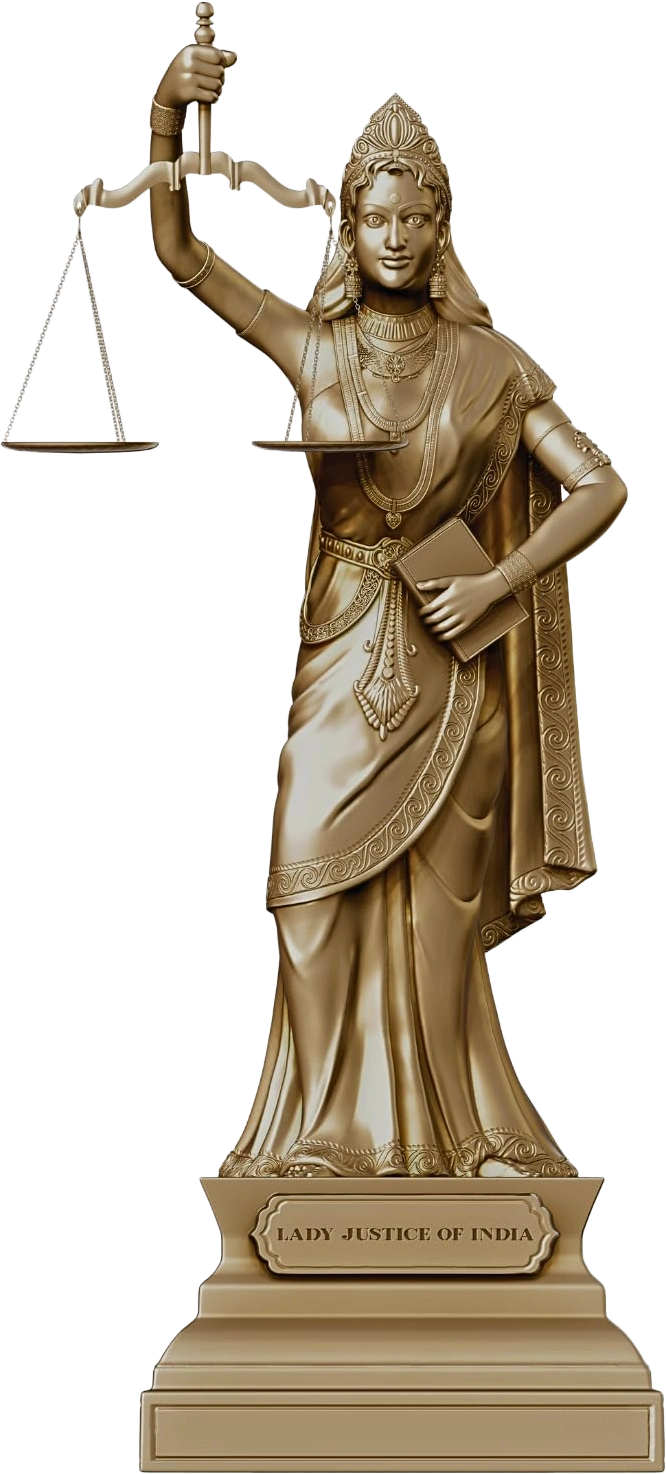 The Constitution of India
This page is published by a citizen of India in exercise of the right to freedom of speech and expression guaranteed by Article 19(1)(a) of the Constitution, which the Supreme Court has held to include the right to receive and impart information (Secretary, Ministry of Information and Broadcasting v. Cricket Association of Bengal, 1995).
It concerns the exercise by others of the right to assemble peaceably and without arms under Article 19(1)(b), and the right to life and dignity under Article 21. It is reportage and fair comment on matters already on the public record. It is not an incitement, not a call to any action, and not an allegation against any identified individual.
How it started
It began with an exam.
If you are coming to this cold, here is the whole thing in order. It runs from a leaked question paper to a word said in a courtroom to a country full of students who will not go home.
3 May 2026
Around two million students sit NEET, the exam that decides who gets to become a doctor in India. The question paper has already leaked. The exam is cancelled. In the weeks that follow, about a dozen student suicides are linked to that cancellation.
In the Supreme Court
Hearing a matter connected to the leaks, the Chief Justice of India describes people who attack institutions as parasites, and reportedly likens some jobless young people and activists to cockroaches.
16 May 2026
Abhijeet Dipke, a communications strategist and student, takes the insult and turns it into a banner. He founds the Cockroach Janta Party, a satirical answer to the ruling party’s name. Millions follow it within days.
6 June 2026
The sit-ins begin at Jantar Mantar in Delhi, joined by long-established student unions. The ask is narrow and repeated: hold someone accountable for the leaks, starting with the resignation of the education minister.
June into July
It stops being a Delhi story. Students march in Mumbai, Bengaluru, Patna, Kolkata, Goa, Kerala and Ladakh. In Patna, police fire tear gas too.
20 July 2026
Police clear the Delhi protest with tear gas and batons. More than a hundred students are injured. Mobile internet is cut in central Delhi and the metro is shut. Almost all of it is filmed.
Days later
A plea over the police action reaches the Supreme Court. The court declines an urgent hearing and says it does not want to watch the videos. The same court whose word became the movement’s name will not look at what happened to it.
Now
They are still on the street, in Delhi and well beyond it.
Sources for this section
- What Is the Youth-Led ‘Cockroach Movement’ Staging Mass Protests in India?
TIME, 22 July 2026 - Exam paper leak, protests and arrests: India’s ‘cockroach’ youth movement explained
Dawn, July 2026 - Gen Z protests led by India’s ‘Cockroach party’ are testing Modi’s leadership
CNBC, 23 July 2026 - NEET protests: Delhi lit the spark, and small towns and cities are keeping it burning
The Federal, July 2026
What happened
They were sitting down.
In June 2026, a youth movement that called itself the Cockroach Janta Party began protesting over leaked exam papers, unemployment, and corruption. The name reclaims an insult: it followed a remark in which the Chief Justice reportedly likened jobless young people to cockroaches. On 20 July, thousands marched toward Parliament, defying a police ban, to ask for the education minister’s resignation.
Human Rights Watch reviewed ten videos and interviewed nine witnesses. It documented tear gas fired into seated protesters, officers beating demonstrators with batons, and three men in plain clothes swinging plastic batons beside the police. Many officers wore no name tags. Facial recognition was turned on the crowd. One young woman was left in critical condition.
The Delhi Police said the protesters were violent, and put the injured at nearly 180, including 118 security personnel and 60 protesters. In central Delhi, mobile internet was cut and the metro was shut. That is how a beating becomes hard to see.
Drone footage of the gathering at Jantar Mantar, showing thousands. Source
Sources for this section
- India: Excessive Force Used Against Student Protesters
Human Rights Watch, 23 July 2026 - Crackdown on peaceful protesters in New Delhi raises serious human rights concerns
Amnesty International, July 2026 - ‘Won’t back down’: Indian student protesters return after police crackdown
Al Jazeera, 21 July 2026 - India’s youth-led Cockroach movement vows to continue protest after police crackdown
PBS NewsHour
Every factual assertion above is attributed to a named, published source and is reproduced as that source’s finding, not as an independent allegation by the author. The position stated by the Delhi Police is reproduced alongside it, in full.
Under the First Exception to Section 356 of the Bharatiya Nyaya Sanhita, 2023 (formerly Section 499 of the Indian Penal Code), an imputation of truth made for the public good is not defamation. No individual officer is named, identified, or depicted anywhere on this page.
The footage
This is what they called violent.
Before the batons, this is what the protest looked like. Thousands of people, sitting, standing, singing, and going home at two in the morning.
Protesters chanting “azadi”, meaning freedom. Sound on. Source
This footage circulated publicly during and after the events of 20 to 23 July 2026. It is reproduced here as a record of a matter of public concern, in reliance on the fair dealing provision for reporting current events at Section 52(1)(a)(ii) of the Copyright Act, 1957.
Each clip links to the original public posting from which it was taken, so that its source can be checked independently. Local copies are retained because material of this kind is frequently removed. No person in this footage is named or identified. If you filmed any of this material and wish it to be credited differently or removed, write to [email protected] and it will be actioned promptly.
In their words
“The protesters were just sitting there, begging the police not to beat them.”
A lawyer who was present, to Human Rights Watch
“I saw male police officers bashing up women.”
A photojournalist, to Human Rights Watch
Sources for this section
- Witness testimony, gathered from nine interviews and ten verified videos
Human Rights Watch, 23 July 2026
These are quotations from witness testimony gathered and published by Human Rights Watch. They are reproduced verbatim and attributed to their source. Reporting the recorded words of an identified publisher is protected expression under Article 19(1)(a), and is not an imputation made by the author.
Children holding protest signs. Source
The court
“We don’t want to watch the videos.”
On 22 July, a lawyer sought an urgent listing of a petition against the police action. When he pressed that there were videos showing police excesses, the Chief Justice of India said: “We are not interested in videos, we don’t have time to watch.” And then: “Don’t waste our time. We don’t want to watch any videos.”
So we will keep the videos. We will keep watching.
Sources for this section
- ‘Don’t Waste Our Time’: Supreme Court Refuses Urgent Listing Of Plea Against Police Action On Student Protesters
LiveLaw, India’s legal news outlet of record - CJI, Whose Comment on Cockroaches Led to a Movement, Says Court Doesn’t Have Time for Videos of Police Excess
The Wire - ‘Don’t waste our time’, says CJI as SC declines urgent listing on CJP protest plea
The Federal
The remarks quoted above were reported verbatim by LiveLaw and independently corroborated by other outlets. They are reproduced exactly as reported.
Section 5 of the Contempt of Courts Act, 1971 provides that fair criticism of a judicial act is not contempt of court. This section comments on a judicial act, being the refusal of an urgent listing, strictly on the basis of published reporting. It imputes no motive to any judge, alleges no impropriety or corruption, and does not question the authority, jurisdiction, or integrity of the Court.
The evidence
What the court would not watch.
These are the videos. They are hard to watch, which is the point. Nothing here is cropped or slowed.
Graphic footage
Police beating protesters. Source
Graphic footage
Police throwing stones at students, while other officers shield them. Source
Graphic footage
Police beating women and students. Source
This material is published as reportage on a matter of public concern, and corresponds to conduct independently documented by Human Rights Watch and Amnesty International. It is presented without commentary as to the identity of any officer, and no individual is named.
No footage identifying any victim of a sexual offence is published on this page. Publication of such material is prohibited by Section 72 of the Bharatiya Nyaya Sanhita, 2023 (formerly Section 228A of the Indian Penal Code), and no exception is claimed or sought.
What you can do
Don’t let it go unseen.
- Read and share the documentation from Human Rights Watch and Amnesty International.
- Save and mirror verified footage before it is taken down.
- Support press freedom and legal aid for those detained.
- Say plainly what happened, and to whom.
Follow
The people doing the reporting.
While the news channels looked away, these accounts kept posting. Follow them for what is actually happening, from the ground.
 @samdishbhatia
Independent journalist, reporting from the ground.
@samdishbhatia
Independent journalist, reporting from the ground.
 @fayedsouza
Independent journalist and news anchor.
@fayedsouza
Independent journalist and news anchor.
 @sundaysarthak
Sarthak Goswami. Independent journalist, host of The Sunday Show.
@sundaysarthak
Sarthak Goswami. Independent journalist, host of The Sunday Show.
 @peektv_in
Independent short-form video news platform.
@peektv_in
Independent short-form video news platform.
 @kk.create
Kavya Karnatac. Documenting India, district by district.
@kk.create
Kavya Karnatac. Documenting India, district by district.
 @harshdelhise
Harsh Yadav. Independent journalist and content creator.
@harshdelhise
Harsh Yadav. Independent journalist and content creator.
 @cockroachjantaparty
The movement’s own account, posting updates directly.
@cockroachjantaparty
The movement’s own account, posting updates directly.
Legal notice
On what basis this is published.
Published by a citizen of India under Article 19(1)(a) of the Constitution. The subject matter concerns Article 19(1)(b), the right to assemble peaceably and without arms, and Article 21, the right to life and dignity. The suspension of mobile internet referred to above is itself governed by the standards laid down in Anuradha Bhasin v. Union of India (2020), which require such orders to be published, proportionate, and open to review.
The right under Article 19(1)(a) is not absolute. It is subject to the reasonable restrictions in Article 19(2). Every ground is set out below, and none of them is attracted:
- Public order. In S. Rangarajan v. P. Jagjivan Ram (1989) the Supreme Court held that the link between expression and public disorder must be direct and proximate, like a spark in a powder keg, and not remote or conjectural. This page reports and comments. It calls for no assembly, no march, and no confrontation.
- Incitement to an offence. In Shreya Singhal v. Union of India (2015) the Court held that discussion and advocacy, however unpopular, are protected, and that only incitement may be restricted. Nothing here urges any unlawful act.
- Defamation. Every factual claim is attributed to a named published source. No individual is named or identified. Truth published for the public good is protected by the First Exception to Section 356, Bharatiya Nyaya Sanhita, 2023.
- Contempt of court. Section 5 of the Contempt of Courts Act, 1971 protects fair criticism of a judicial act. Judicial remarks are quoted exactly as reported by LiveLaw, and are commented upon without imputing motive.
- Sovereignty and integrity of India, and security of the State. In Kedar Nath Singh v. State of Bihar (1962) the Court held that strong criticism of the government is not sedition absent incitement to violence or public disorder. Section 152 of the Bharatiya Nyaya Sanhita, 2023 requires incitement to secession, armed rebellion, or subversive activity. Criticism of the conduct of a police force, and of a listing decision, is none of these.
- Decency or morality. The page contains no obscene material.
- Friendly relations with foreign States. Not engaged. The sources cited include international organisations, which is reporting, not foreign involvement.
This page is published in the public interest. Every factual statement on it is attributed to a named source. Every video links to the original public posting it was taken from, and local copies are kept here because material of this kind is routinely deleted.
Nothing on this page will be taken down because someone finds it inconvenient. If you can show, with evidence, that a specific statement is factually wrong, it will be corrected and the correction will be recorded in public. That is not a concession. Accuracy is the entire ground this page stands on, and an objection without evidence is not a correction.
The illustrated banner used to link here is an illustration, and is not presented as a photograph of any real person or incident. Every image and video on this page is documentary, and every clip is credited to its original source.
Corrections, with evidence, to [email protected].
Reporting current as of 23 July 2026.