
Don't Hide the Constraint. Make It the Idea.

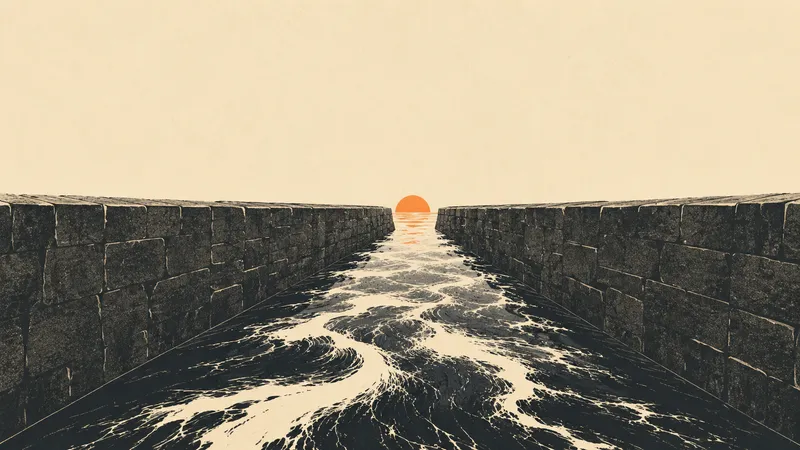
A river without banks isn’t a river.
It’s a flood.
The banks are the limit. Water can’t go where it likes. And that same limit is the only reason there’s a river at all: a current, a direction, something you’d stand and watch.
Every project hands you banks like that. Bad signal. A screen that could close. A window too small. A machine that can’t do the one thing the real thing does.
For years I treated those as problems to hide. Sand off the edge, hope nobody notices.
Now I do the opposite. I look for the limit first, because it usually is the idea. Just wearing a disguise.
The idea in 20 seconds
- Every brief comes with a constraint you can’t remove.
- Your instinct is to paper over it and apologise.
- But the constraint is a clue. It’s telling you what to build.
- On four different projects, the limit I was handed became the whole concept.
- The move is the same every time: don’t hide it. Name it. Design straight into it.
What do you do with a limit you can’t remove?
You can fight it. You’ll lose.
You can hide it. Users always feel the seam.
Or you can ask a better question. Not “how do I get rid of this?” but “what is this limit quietly asking me to make?”
That third question has built more of my work than any brief ever did.
The village with no signal
On SBI Youth for India, the fellows lived in villages with poor internet. They couldn’t upload photos from the field in real time. There’d be a delay. Sometimes a long one.
I could have hidden the lag behind a spinner and pretended it was instant.
Instead we leaned all the way in. We gave the photos a “polaroid” look: captured earlier, framed like a memory. The delay stopped being a bug. It became the voice, a moment from the field with context and reflection.
The bad signal wrote the aesthetic.
The app that could vanish mid-trade
10x.Trade lives inside Telegram. And a Telegram app can close on you mid-action. People were trading real money and panicking that a closed window meant a lost trade.
The fragile part was real. You can’t promise the app never closes.
So we built a transaction that survives a closed app, and a loading bar that names each step out loud, so nothing ever feels dropped in the dark.
The scary limit became the trust feature.
The screen that was never full
PepeJump is a game inside Telegram too. And Telegram only hands you about 65% of the screen. That’s it. No arguing.
A smaller canvas sounds like a loss.
But that hard ceiling forced a tight, focused loop. No sprawl. No room for filler. The limit did the edit for us and made the game sharper than a full screen ever would have.
The laptop that can’t breathe
Then there’s the Mac Harmonium, a harmonium you play on a laptop. A real harmonium runs on air. You pump a bellows, and the reed sings. A laptop can’t blow air. Full stop.
That’s the kind of limit that ends a project.
Unless it becomes the soul of it. So you keep rocking the lid to pump, and the note dies the instant you stop. Exactly like the real thing. The missing bellows became the feeling.
So what’s the actual move?
Four projects. Four limits I didn’t choose. One move every time.
Stop hiding the constraint. Stop apologising for it. Put it in the centre of the table and ask what it’s secretly telling you to build.
Poor signal told me to slow down and reflect.
A closing app told me to earn trust step by step.
A cropped screen told me to focus.
No bellows told me to make you keep moving.
None of those were compromises. Each one was the concept, handed to me for free, and I almost missed it because it arrived dressed as a problem.
The honest part
I’d love to tell you I saw this clearly from the start. I didn’t.
Most of the time my first instinct was still to hide the edge. The good work only started when I stopped.
So here’s the truth I keep relearning. The limit isn’t the enemy of the idea.
Most days, it’s the only idea worth having.
More writing
 systems designinformation designinteraction design
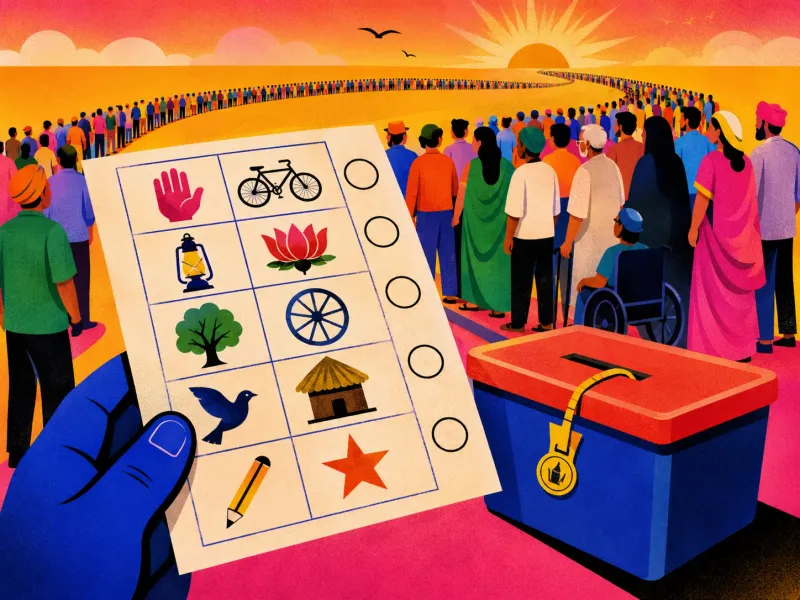
How Do You Design a Democracy for 173 Million People?
India's first general election was not only a political achievement. It was a vast exercise in inclusive system design.
 systems designinformation design
Arm the Believer Inside
In a big organisation you rarely win the room yourself. You find the believer inside it, and arm them to win it for you.
 systems designinformation design
Finalised Isn't Final
We signed off a Diwali design for TUMI. Then a VP pulled it back. A quiet lesson about where design decisions really get made.