
Google Pay Taught a Country a Gesture. I Borrowed It.

The best gesture you’ll ever design is one you don’t have to teach.
Think about how you unlock your phone. You don’t think about the swipe. Your thumb just knows. Somewhere along the way it learned, and now it’s automatic.
I built a whole campaign on that idea. For a condom brand. And the thing that taught me how to do it was a payments app.
The idea in 20 seconds
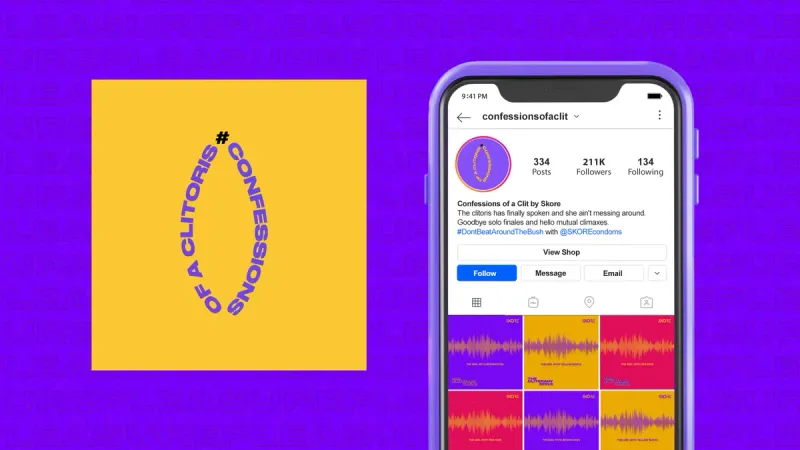
- Skore launched OH! Pleasure Gel, a product for the clitoris, aimed at a problem most people won’t say out loud.
- The real gap wasn’t desire. It was technique. A lot of men were simply never taught where the clitoris is, or what to do.
- You can’t sell a solution to a problem people don’t know they have.
- So we built a banner ad you rub with your thumb. Rub it right, you unlock a discount. Rub it wrong, it teaches you.
- We didn’t invent that rubbing gesture. Google Pay had already trained the whole country. We just aimed it somewhere new.
The problem nobody would say out loud
Research on sexual behaviour in India is bleak in a quiet way.
Somewhere between 65 and 75% of women don’t reach orgasm during intercourse. Around 15% never have. Not once.
You could blame a lot of things. But part of it is embarrassingly simple. Most men were never taught the basics: where the clitoris is, what actually works. Nobody sat them down. Nobody could.
So here’s the design problem. How do you sell a product that solves a problem half your audience doesn’t know exists, in a country where you can’t say the words out loud on television?
You can’t lecture. Nobody reads the caption. Nobody watches the “educational” video.
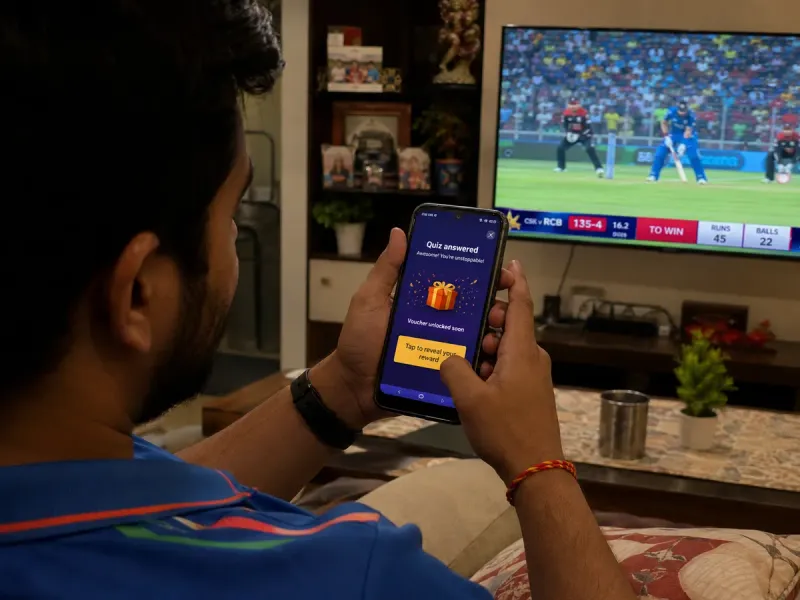
Why teach a gesture when the country already knew one?
The insight we kept coming back to was this. Men learn best when their hands are already busy. The teachable moment isn’t the classroom. It’s the half-second right before a reward.
So we made the ad a game.
A mobile banner. You rub the screen with your thumb in a certain pattern. Rub it the right way, at the right speed, and it unlocks a discount coupon for the product. Rub it wrong, and the banner gives you a real tip: where to go, how fast, less pressure. Different cards used different patterns, each modelled on what actually works.
The education wasn’t written on the ad. The education was the ad. Your thumb was the student.
And the part I’m proudest of is this. We never taught the gesture.
We didn’t have to.
By 2021, Google Pay had trained the entire country to rub a screen. Their scratch cards were everywhere. Pay for something, scratch the little card, win real money. Millions of thumbs, every single day, doing the exact motion we needed.
So we skipped the hardest part of any interface: teaching a new action. The action was already muscle memory. All we had to add was where to apply it, and how fast.
That’s the whole trick. Don’t teach a new move. Borrow a known one, and point it at something new.
Did it work?
For a campaign that couldn’t quite say what it was about, it travelled.
- It reached around 3 million people.
- Over 6 million impressions.
- More than 135,000 men actually engaged with the coupons.
- 8,000 got the technique right and unlocked the reward.
We brought in sex educator Leeza Mangaldas so there was a real voice behind it, not just a brand winking. And we ran the first-ever live brand activation on Clubhouse in India, back when everyone was crowded into those audio rooms.
But the number I care about most isn’t a number. The women it was really for didn’t just tolerate it. They shared it. That’s the one that told me it landed.
The part I’d fix
I’ll be honest about the weak spot.
The gesture was strong. The moment was strong. But what happened after? A man redeems the coupon, and then the loop just kind of ended. We didn’t build much for the day after. The conversation after. The habit after.
If I did it again, I’d push hard right there. A clever gesture opens a door. It doesn’t walk anyone through it.
There was a ceiling too, and it wasn’t nerve. Nothing got censored, because the quirk and the game won people over. But it mostly reached the big, English-speaking cities. The smaller towns, where this lesson was needed just as much, would’ve needed local-language versions we never built. The wall wasn’t courage. It was language.
One last thing
I’m proud of this one. A gesture the whole country already knew, quietly aimed at the one thing nobody would teach.
But a good gesture only gets you in the door. What you do after is the real work. And that’s the part we left half-built.
Both true. I’m leaving it there.
Sources and further reading
More writing
 human factorsinteraction design
My Friend's Guruji Said No. I Shipped Anyway.
I turned a MacBook into a harmonium with an AI's help. The master's ear said no. Mine couldn't tell the difference. So I shipped it anyway.
 interaction designhuman factors
Trust Is Built With Copy, Not Code
In a scary crypto app, what made people feel safe wasn't the technology. It was plain words and small honest moments.
 usabilityinteraction designhuman factors
The Door That Blames You
Norman doors reveal why repeated human error is often an object communicating badly.